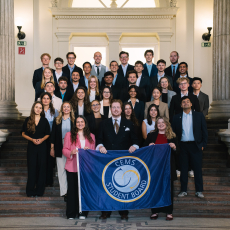
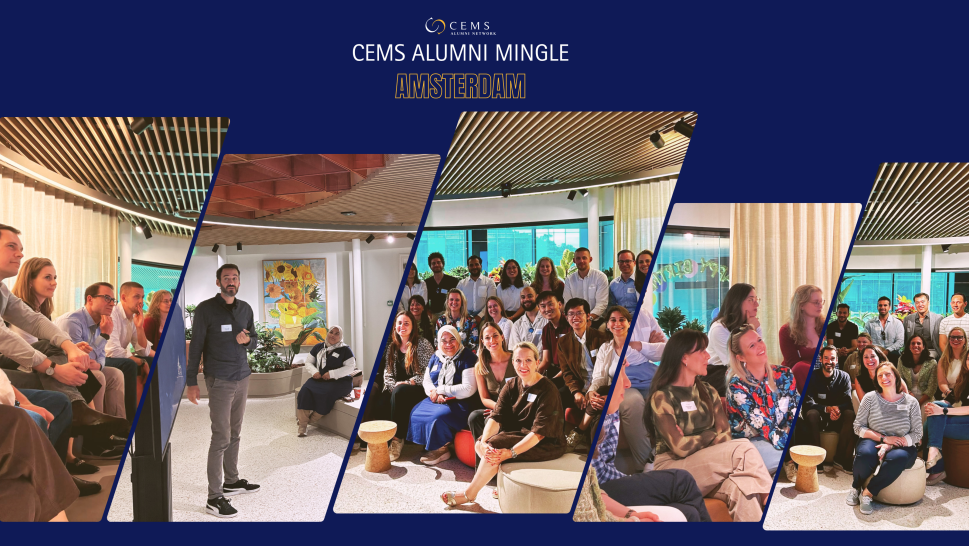
Hosted at Henkel in Amsterdam, a CEMS Corporate Partner, and organised by the CEMS Global Office Alumni Relations and Rotterdam School of Management, Erasmus University, the CEMS Alumni Mingle brought together a diverse and energetic crowd of over 40+ attendees which included CEMS Alumni & RSM Executive MBAs.
The evening seamlessly blended networking with deep personal development, proving once again the unique value of the CEMS global community.
Unlocking the Formula to "Getting Happier"
The highlight of the evening was an interactive workshop titled "The Psychology of Happiness," led by Dr. Philip Eskenazi, CEMS Alum 2009 and an expert in decision-making and critical thinking skills from the Rotterdam School of Management, Erasmus University.
Dr. Eskenazi challenged the audience's traditional perceptions of joy, asserting that while permanent, absolute "happiness" doesn't exist as a final destination, we can actively get happier by treating it as a set of skills.
He broke down the core formula of human happiness:
- 50% Genetics
- 10% Circumstances
- 40% Intentional Actions
Because a massive 40% of our happiness is within our conscious control—and because humans don't naturally know how to optimize it—Dr. Eskenazi walked the alumni through actionable techniques rooted in Positive Psychology.
Key Takeaways from the Workshop
Attendees walked away with practical, science-backed strategies to engineer their own daily path to joy:
- Savoring: The practice of consciously moving attention to an enjoyable experience. To combat our natural tendency to seek constant novelty, Dr. Eskenazi suggested simple cues—like a reminder to savor meals or eating a piece of chocolate every day.
- Gratitude: Cited as a massive contributor to self-worth and social connection. Alumni were encouraged to start daily gratitude journaling (listing three things each day) or writing gratitude letters to elevate their appreciation for others.
- Kindness & Satisfaction: Recognizing that humans are wired for kindness and indirect reciprocity ("paying it forward"). What you do for others ultimately makes you happier than what you do for yourself.
- The Power of "Flow": Finding states of total absorption in challenging tasks where you are highly competent (e.g., playing an instrument, skiing, or coding) serves as one of the highest achievable states of human happiness.
- Meaning & Connection: Humans want to see themselves as part of a bigger story. The workshop urged alumni to regularly reflect on the value their work contributes to others, stay true to their core values, and actively engage in communities—much like the CEMS network itself.
Commitment to Change
The event concluded with an invitation to turn theory into action. Because behavioral change is difficult, Dr. Eskenazi challenged the audience to make small, daily commitments linked to existing routine cues—whether practicing daily gratitude, playing to personal strengths, or intentionally stepping away from the social comparison game.
With a wealth of book recommendations shared—ranging from Mihaly Csikszentmihalyi’s Flow to Martin Seligman’s Authentic Happiness—the crowd moved into the networking portion of the evening feeling inspired, grounded, and newly connected.
A huge thank you to Torsten Rowekamp, CEMS Alumni and at Henkel for hosting, to Dr. Philip Eskenazi for sharing his invaluable insights, and to all the CEMS and RSM alumni who brought their fantastic energy to Amsterdam!
---------------------------------------------------------
Did you miss the event or want to follow up on the Positive Psychology insights? You can reach out to Dr. Philip Eskenazi directly at peskenazi@rsm.nl. Curious about the next event? Check out the CEMS Alumni Platform for more details at www.cemsalumni.net.