Beer consumption is gradually declining, while consumers have more non-alcoholic choices than ever. For Plzeňský Prazdroj, one of the Czech Republic’s leading brewers (Asahi group and CEMS Corporate Partner), this created a very practical strategic question: where could the company find new drinking occasions without simply shifting consumers away from its existing beer business?
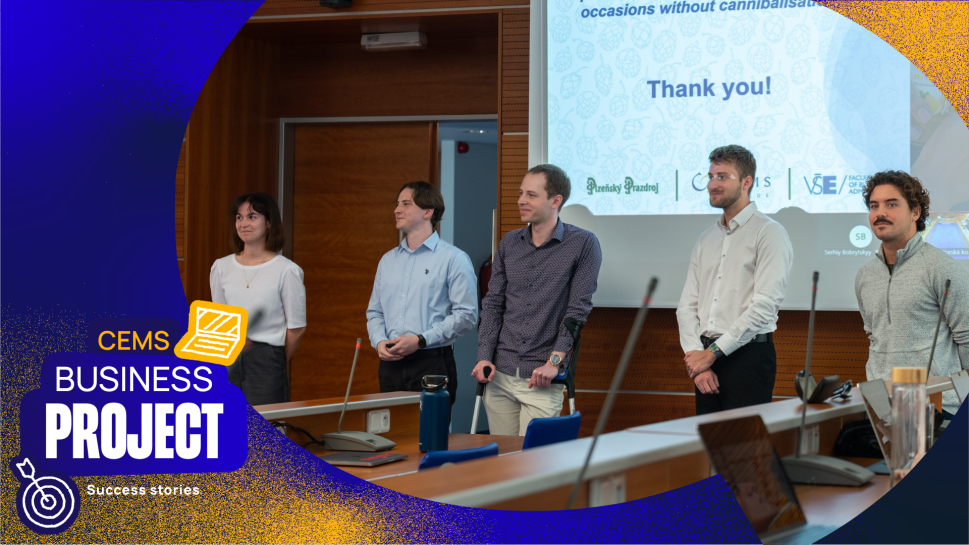
This became the brief for five CEMSies at VŠE: Tomáš Adamec, Michel De Macedo, Kateřina Prosecká, Vojtěch Nedvěd and Fynn Mika Stolzenberger. Guided by VŠE Lecturer Serhiy Bobrytskyy and working closely with Corporate Partner Radek Záhorovský and his team at Plzeňský Prazdroj, they tackled the challenge from February to May 2026.
Like all CEMS Business Projects, it was not a case study built for the classroom. The students were working as a small consulting team on a live company challenge, with access to company data and regular interaction with the people responsible for the business.

“The students generated a number of fresh ideas and alternative viewpoints that challenged some of our existing assumptions and helped us look at the opportunity from different angles.”
— Radek Záhorovský, Head of Finance Business Partnering CZ&SK&GE&AT, Plzeňský Prazdroj
From eleven possibilities to two concrete propositions
The team began broadly. Rather than simply asking which non-alcoholic categories were growing fastest, they looked at when and why people choose different drinks.
They assessed 11 beverage categories, comparing factors including market size, growth, competition and fit with Plzeňský Prazdroj. Their analysis eventually narrowed the field to two very different opportunities: functional water and kombucha.
But the work did not stop with identifying attractive categories. For each route, the students developed a complete proposition, looking at potential consumers and occasions, market size, positioning and design, pricing, logistics and financial viability. They also considered how each idea could realistically fit within the company and its existing capabilities.
For Fynn, this was the real achievement: turning a broad strategic challenge into something tangible, by connecting market insight, consumer needs, finance, design, pricing and logistics into one coherent proposition. “We managed to put all the pieces together. That’s what I’m most proud of,” he says.
Several of the students’ ideas are still being explored as part of Plzeňský Prazdroj’s wider strategic discussions.
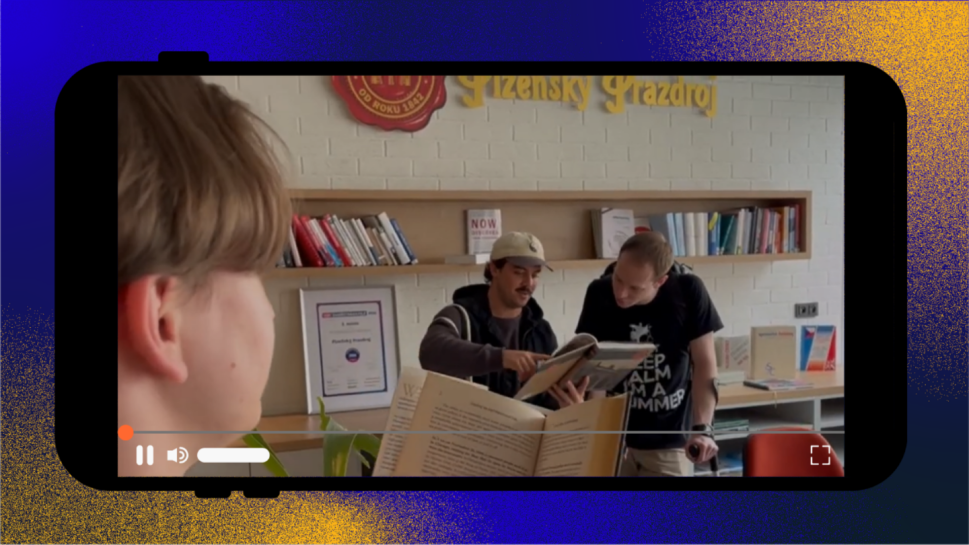
Students from the 2026 CEMS Business Project with Prague University of Economics and Business and Plzeňský Prazdroj share their experience, what they worked on and what they took away from the project.
Watch the students’ video about the projectWhen the classroom starts to feel like the client room
The project also gave the team something harder to reproduce through a traditional academic assignment: sustained exposure to a real client.
The students met the Plzeňský Prazdroj team approximately every two to three weeks. Between meetings, they analysed data, developed their models and prepared proposals. Then they presented their thinking, received feedback - and sometimes had their assumptions challenged.
For Fynn, the project therefore started to feel like real business very quickly: “It wasn’t just that they gave us a task and left us to it. It was really cooperation.”
That relationship extended beyond formal presentations. After some Wednesday sessions, the students joined company colleagues at the pub located within the Plzeňský Prazdroj premises: a small but memorable glimpse into the people and culture behind the business challenge.
Learning to bring an answer, and listen to the response
Today, as Fynn continues to build experience in consulting during his CEMS internship, it is that repeated client interaction that he sees as one of the most useful outcomes of the project.
Analysis and financial modelling mattered. But so did learning how to enter a client meeting with a well-supported recommendation, explain it clearly, listen when it is challenged and adjust when necessary. “You’re there to bring them a solution, but obviously also be open to their suggestions,” he says. The experience also helped him build confidence in those conversations.
For Plzeňský Prazdroj, there was another benefit: several months of working closely with CEMSies provided a direct view of how they analyse, collaborate and respond to a complex business problem and of their potential fit for future opportunities within the company.